 Dikkasmedia
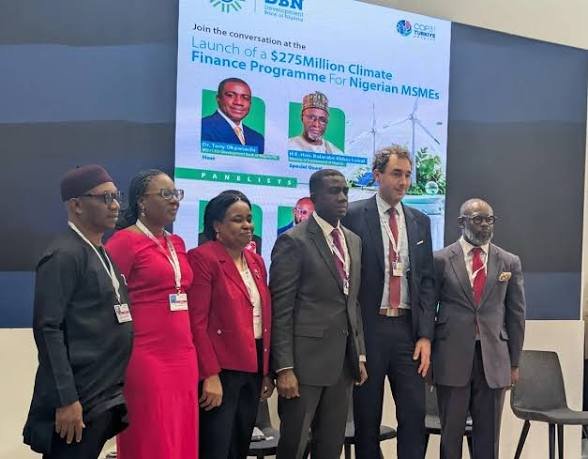
The Federal Government, through the Development Bank of Nigeria (DBN), has launched a $275 million financing programme aimed at helping small and medium-sized businesses invest in renewable energy, climate-resilient agriculture and environmentally sustainable operations.
The initiative, known as the DBN Enterprise Lending for Transition and Adaptation (DELTA) Programme, was unveiled during the 31st United Nations Climate Change Conference (COP31) in Türkiye. It is designed to improve access to affordable, long-term financing for Nigerian businesses facing high operating costs and climate-related challenges. Punch Newspapers
The programme includes a $100 million contribution from the Green Climate Fund and is expected to benefit approximately 1.3 million people. It also aims to reduce greenhouse gas emissions by an estimated 4.5 million tonnes of carbon dioxide equivalent.
Speaking at the launch, DBN Managing Director and Chief Executive Officer, Tony Okpanachi, explained that many Nigerian businesses struggle to access financing for investments in cleaner technologies because of high initial costs, collateral requirements and limited access to long-term loans.
The fund is expected to support practical business investments, including replacing expensive diesel generators with solar power systems, installing efficient irrigation facilities and adopting cleaner production technologies.
For example, a food processing company could use the financing to install solar equipment and reduce its dependence on diesel generators. Similarly, agricultural businesses could invest in irrigation systems that help protect production against unpredictable rainfall.
The Federal Government said the initiative would combine lending, risk-sharing arrangements and technical assistance to encourage financial institutions to provide more funding for climate-related business projects.
The programme also seeks to attract additional private-sector investment and make climate financing more accessible to smaller enterprises rather than concentrating it among large corporations.
The launch presents another financing opportunity for Nigerian businesses seeking to expand operations, reduce energy expenses and improve productivity. However, the actual benefits will depend on the programme’s lending conditions, participating financial institutions and the accessibility of the funds to eligible enterprises.

Dikkasmedia
Dikkasmedia was founded with the aim of filling the gap in providing timely and accurate news. We focus on ensuring truth, fairness, and upholding the principles of modern journalism. For collaborations or commercial advertising, contact info@dikkasmedia.com
View all posts by DikkasmediaRelated stories